

Hadapsar, in the south-east of Pune, and Charholi, on the north-eastern edge, feel quite different, yet families in both ask the same question: where are the good schools in Pune for CBSE that will not turn every school morning into a long drive? The answer depends less on reputation and more on the child, the route and the daily routine of the household.
A sensible search starts at home, not with a list of names. Mapping where parents work, how a child will travel and which stage of school the child is entering narrows the field quickly.
What Is It Like to Live and Study in Hadapsar?
Hadapsar is one of the older growth areas in eastern Pune. It grew around the Pune-Solapur road and the large IT and business parks nearby, including Magarpatta, and it now mixes established housing societies with newer towers. Schools here have had decades to develop, so families will find a spread of campuses, from compact older buildings to larger sites further out.
The flip side is congestion. Stretches of Solapur Road and the junctions around Hadapsar slow down sharply at peak hours. A school that is five kilometres away on paper can take far longer at 7.30 in the morning, and that time comes out of a young child’s sleep.
How Is Charholi Different for Families with Young Children?
Charholi falls within Pimpri-Chinchwad limits, close to Alandi and north of Lohegaon. Much of its housing is recent, and the area has drawn families who want more space than the city centre allows. Schools in a growing area like this are often newer too. That can mean modern buildings and smaller early years sections, but also a shorter track record to judge.
Parents in Charholi should look at how a newer school has handled its first few batches: teacher turnover, how the primary section has expanded, and whether facilities promised at launch have actually been built. Families moving in from other parts of Pune sometimes find that older children already settled in a school elsewhere face a long commute, which can shape the decision for younger siblings as well.
How Much Should Commute and Traffic Shape the Choice?
More than most parents admit at the start. A reasonable rule of thumb is to test the route at the actual school time before applying, on a working weekday. School bus routes deserve the same scrutiny. Ask where the first pick-up point is, how long the longest route runs, and whether there is an adult attendant on board for younger children.
For preschool and early primary, many families decide that a short, predictable trip matters more than any single facility. A tired five-year-old will not get much out of a swimming pool at the end of a ninety-minute ride.
Monsoon months deserve a thought as well. Routes that are easy in February can slow to a crawl during heavy rain, and low-lying stretches sometimes become waterlogged. Asking parents of current students how the bus coped last July is often more informative than any official timetable.
What Should You Check When Visiting Good Schools in Pune for CBSE?
A campus visit tells you more than any brochure, provided you look past the reception area. Walk through a classroom in session if the school allows it. Notice whether children are talking and working or sitting silently while a teacher speaks. Look at the toilets, the drinking water points, the playground surface and how easily a small child could reach the exit from an upper floor.
Ask whether the school’s CBSE affiliation covers all the classes it runs and up to which level. It is also reasonable to ask how classes are sized, how teachers are trained, and how the school communicates with parents day to day. It is also worth asking how the primary timetable balances English, Hindi and Marathi, since all three usually appear in the early classes.
Is Montessori in Pune a Good Start Before a CBSE Primary School?
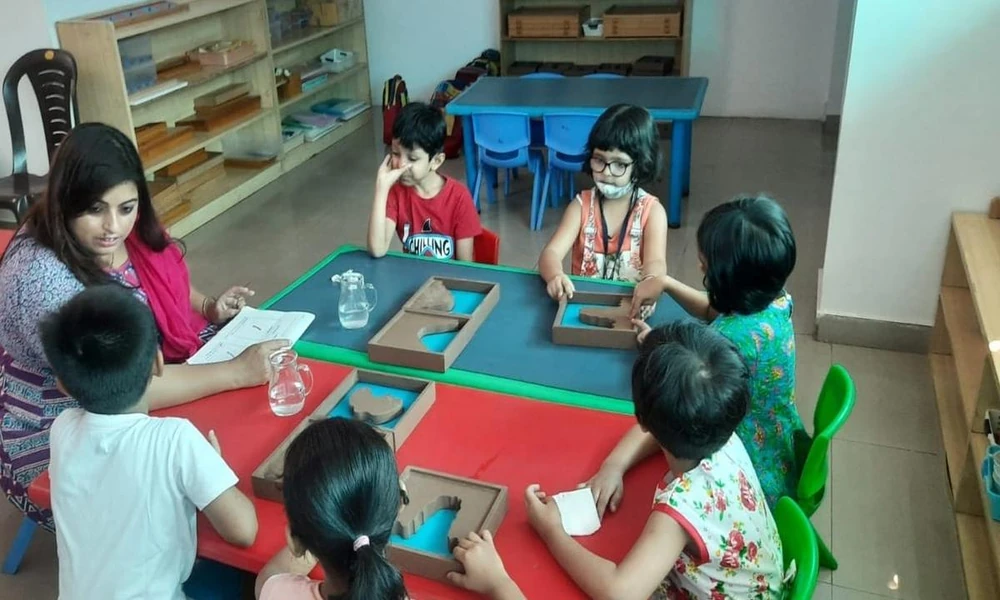
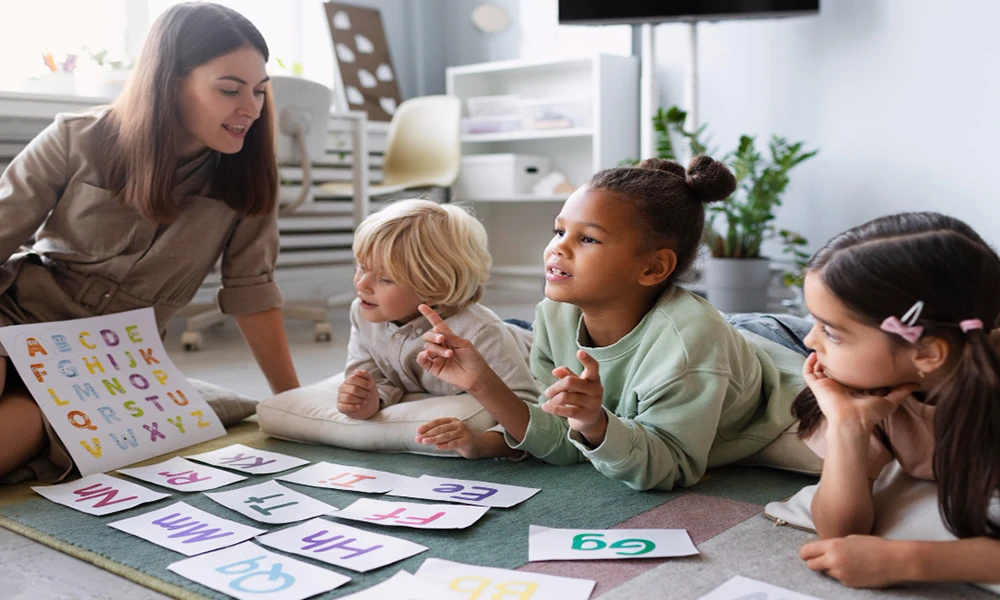
Before Class 1, families usually choose between a conventional play-based preschool, a Montessori or Montessori-inspired section, and programmes that combine elements of both. The interest in Montessori in Pune has grown steadily, and several CBSE schools now run Montessori-based nursery and kindergarten classes that lead into their own primary sections.
The label alone tells you little. A genuine Montessori room has mixed ages or at least long periods of self-chosen work, specially designed materials on low open shelves, and teachers who observe more than they instruct. If every child is doing the same worksheet at the same time, the method is Montessori in name only.
How Do CBSE Schools Compare with International Schools in Pune?
Some families in both areas will also look at international schools in Pune, often because a parent’s job could involve a move abroad. These schools generally follow the International Baccalaureate (IB) programmes or Cambridge qualifications such as IGCSE and A Levels, and some offer more than one curriculum on the same campus.
The main differences show up in how learning is assessed and how much subject choice students get later on. Fees deserve an early question too, because international programmes often carry registration and examination charges in the senior years that are set by the awarding body rather than the school. Ask which costs are included in the published fee and which are billed separately as the child moves up. Families in Hadapsar and Charholi often find that the number of international options close to home is smaller than the number of CBSE campuses, which brings commute back into the decision.
How Should Families Weigh Distance Against Curriculum Fit?
Start with the child’s stage. For nursery and early primary, a short commute and a warm, well-run classroom count for more than an extensive list of facilities. For older children, curriculum, subject choice and long-term plans carry more weight, and a longer trip may be worth it. Shortlist two or three schools within realistic travel time, visit each on a normal school day, and compare what you saw rather than what you were told.